Martingale
Double your stake after every loss until you win. Recovers all previous losses plus one base unit, but requires a deep bankroll.

European roulette is the most popular variant worldwide, offering the best odds for players with its single zero pocket. The classic 37-pocket wheel delivers a 97.3% RTP and a 2.7% house edge.
Find a casino
Compare licensed operators and pick one for your country.
Sign up
Verify your email — usually under 2 minutes.
First deposit
Card, e-wallet, Card, crypto. Bonus often unlocks here.
Pick European
Choose a European table — best RTP among classic variants.
Set budget
Decide how much you can lose without affecting your day.
Place bet
Drop chips on numbers or sectors and spin the wheel.
Double your stake after every loss until you win. Recovers all previous losses plus one base unit, but requires a deep bankroll.
Increase your bet by one unit after a loss, decrease by one after a win. Slower, safer escalation than Martingale.
Bet according to the Fibonacci sequence (1-1-2-3-5-8-13…) after losses; back two steps after each win.

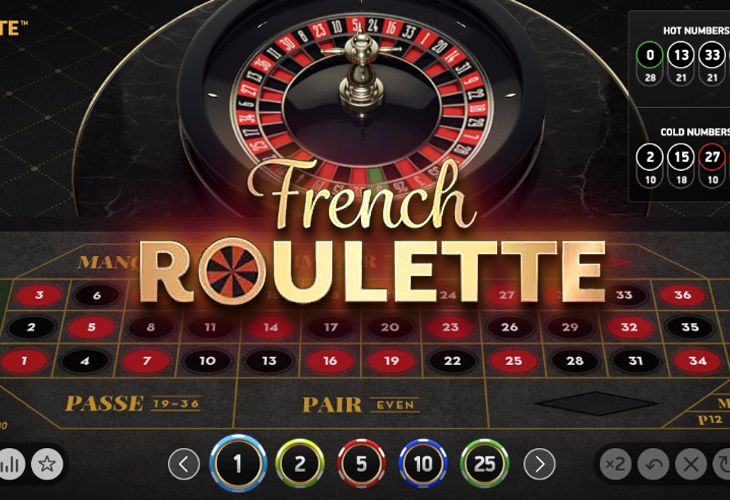


European roulette is the benchmark and most widespread rule set: 37 numbers including 1 zero, at a fairly favourable RTP of 97.3%. This game of chance — in both random-number-generator and live-dealer formats — is available at every self-respecting casino, and we built our casino rating specifically around the roulette they offer. This article breaks down what makes European roulette special, how and where to play it, and how to manage your bankroll.
European roulette for free and without registration isn’t a marketing gimmick but a real option. For random-number-generator versions, demo mode lets a casino visitor play with virtual credits without risking their own money — so you can:
To play for free, use our built-in simulator at the top of the page — place chips on the table, spin the single-zero wheel and watch your virtual balance. No signup, no deposit, purely for practice; your balance and round history are saved in your browser so you can pick up where you left off.
European roulette versions vary somewhat by provider — here are three good examples for an easy start:
We won’t claim these are the best roulettes by default, but for a first casino visit they’re a solid choice.
It’s important to choose not only the European-roulette provider but also a venue that serves you at the highest level. We offer a casino rating for European roulette, based on expert assessments and constantly updated to stay current.
We built our venue rating on criteria you can prioritise according to your own priorities, but definitely shouldn’t ignore:
Also watch the available payment methods and whether support is offered in your language.
At many venues online roulette is short-changed on bonuses: even the welcome gift, if it can be wagered at all, often counts only 10–20% of your bet amount. For example, with a $100 bonus at 40× wagering, on slots you’d wager $4,000, but on roulette counting 10% of the bet — already $40,000! Wagering a gift on such terms takes a miracle, and a reward for games you don’t enjoy has no value. So pick casinos that offer cashback and reload bonuses specifically for roulette, or simply with no game-type restrictions on wagering.
The result of a round in European roulette is determined by which of the 37 numbers the ball stops on; your job is to bet on how the game will end before it starts. The rules provide for bets with different risk levels: the chance to guess a specific pocket is just 2.7%, while odd/even or red/black is 48.6%.
Each pocket of the wheel is numbered (from 0 to 36), but the numbers are arranged in a scattered order (0-32-15-19-4 and so on), and each also has a colour — red or black, strictly alternating (zero is green). This is done for balance: while the wheel spins, even as it slows, it’s still completely unclear which bet will hit, and the round’s fate can play out in different ways.
Real-money roulette has two extremes: a bet on a single number is too risky, while paired markets won’t bring a big win. As a middle ground, sector bets are used — on whole sectors:
These bets are also called called bets, because they belong to neither inside nor outside bets (they have no place of their own on the table layout).
European roulette is great for its abundance of bets with varying risk and payout scale. The table below will serve as a guide for those who haven’t yet figured this out.
| Bet | Win probability | Payout on a win |
|---|---|---|
| Single number | 2.7% | 35 to 1 |
| Two numbers (split) | 5.4% | 17 to 1 |
| Three numbers (street) | 8.1% | 11 to 1 |
| Four numbers (corner) | 10.8% | 8 to 1 |
| Six numbers (line) | 16.2% | 5 to 1 |
| Column | 32.4% | 2 to 1 |
| Dozen | 32.4% | 2 to 1 |
| Odd/even | 48.6% | 1 to 1 |
| Red/black | 48.6% | 1 to 1 |
| Low (1-18)/high (19-36) | 48.6% | 1 to 1 |
The most reliable bets are on paired markets — the win chance there would be 50/50 if not for the zero factor. A single-number bet is very risky, but if you guess it, you hit the jackpot.
European roulette is very popular but not the only option — here’s how it compares with other variants of the same game on key criteria.
| Parameter | European | French | American |
|---|---|---|---|
| Numbers on the wheel | 37 | 37 | 38 |
| Zero | 1 (0 only) | 1 (0 only) | 2 (0 and 00) |
| RTP | 97.30% | 98.65% | 94.74% |
| La Partage rule | No | Yes | No |
| En Prison rule | No (with rare exceptions) | Yes | No |
| Sector bets | Yes | Yes | No |
If your priority is maximum RTP, choose French roulette, but the European version is a bit simpler for beginners to understand and more widespread. Since American roulette has two zeros, the win chances there are relatively low — it’s the choice for those who like higher risk.

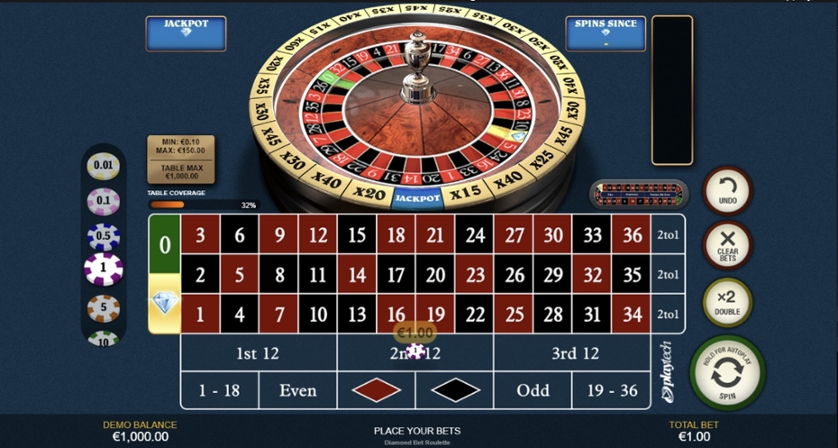
It can be hard for an inexperienced player to grasp the principles of playing European roulette at an online casino. We offer a short guide to help you get the most enjoyment from the process, whether demo mode or real-money play.
European roulette is available at most casinos; your job is to pick the optimal option, guided by our rating and the criteria mentioned above in this article. While in demo mode you can try random-number-generator roulette even without registering, for real-money play you’ll have to register. Practically all venues require KYC: a win can only be withdrawn if you provide ID.
Once registered and planning to play for real money, first top up your balance. Deposits at modern casinos credit instantly, while the threshold amount depends both on the specific venue and the chosen payment method, but in general you won’t be able to deposit less than $1.
A casino may have many European roulette tables — pick the most suitable by these parameters:
We recommend beginners start their acquaintance with online roulette in demo mode.
We covered in detail above which bets you can make in European roulette and the win odds in different cases. Experts recommend casino visitors bet a relatively small percentage of the bankroll, to stretch out play and avoid losing all your money too fast during a prolonged losing streak. In gambling it’s important to stop in time: decide in advance at what amount of money lost in a session you’ll stop the wheel. After a loss, don’t rush to win it back and don’t make unplanned deposits — you can regret such emotion-driven decisions.
No roulette strategy guarantees success: a win in this game depends only on luck. But you can and should use bankroll-management strategies: they help stretch even a small balance into a long and exciting session.
Martingale performs best on paired markets, where the potential payout is 1 to 1. The strategy’s idea is doubling the initial bet after each loss, which lets you cover all previous losses, returning to the starting amount after a win. It’s important not to hit limits, your own or the table’s: for example, on a prolonged losing streak with a first bet of $5, the seventh would already be $320 — your wallet or the table’s terms may not allow this.
Let’s see with an example how you can hit table limits using Martingale. Imagine a player started at $10 and hit a losing streak, with the maximum bet for this title being $250.
| Bet number in the streak | Amount | Action after a loss |
|---|---|---|
| First | $10 | Double |
| Second | $20 | Double |
| Third | $40 | Double |
| Fourth | $80 | Double |
| Fifth | $160 | Can’t double, the streak breaks |
| Sixth | Should be $320, but the table doesn’t allow it |
Martingale is also dangerous: on a long losing streak the bankroll burns through too fast.
Here it’s exactly the opposite: the bet doubles after each win (you can afford it!), and right after a loss returns to the base amount. This strategy is more resistant to prolonged bad luck; it suits everyone whose bankroll isn’t that large.
Both strategies involve a progressive change of the bet amount after each win or loss, only D’Alembert suggests adding (after a loss) or subtracting (after a win) one fixed unit, while Fibonacci means stepping forward (after a loss) or two back (after a win) along a number sequence where the step forward equals the sum of the two previous numbers (1, 1, 2, 3, 5, 8, 13 and so on). As an example — a table with the condition that our first (base) bet is $5, and the fixed step for D’Alembert is $1.
| Bet number and result | Bet amount (D’Alembert) | Bet amount (Fibonacci) |
|---|---|---|
| First — win | $5 | $5 (1) |
| Second — win | $4 | $5 (nowhere to step back — 1) |
| Third — win | $3 | $5 (1) |
| Fourth — loss | $2 | $5 (1) |
| Fifth — loss | $3 | $5 (on a losing streak the sequence begins — 1, 1) |
| Sixth — loss | $4 | $10 (1, 1, 2) |
| Seventh — win | $5 | $15 (1, 1, 2, 3) |
| Eighth | $4 | $5 (two steps back — 1, 1) |
Both strategies let you recover after losses but protect the client from breaking limits and burning through the bankroll too fast during a streak of unlucky losses.
A player will guess the exact winning number quite rarely, so it makes sense to bet on a sector. For example, for 6 chips you can bet on the whole Tiers du Cylindre sector, covering 12 numbers at once (32.4% of the wheel) as if with six splits. If any of them hits, the client takes a 17-to-1 payout, losing 5 of 6 chips in the process. This is practical if you fear long losing streaks but want more risk and bigger payouts than on paired markets.
By an unwritten standard, European roulette differs from French in that the latter offers the En Prison and La Partage rules, and the former does not. In practice a number of casinos are willing to offer a hybrid in which the En Prison rule exists even in European roulette, which reduces the house advantage from the “European” 2.7% to the “French” 1.35% — and so is very favourable for the player.
In European roulette, En Prison is your insurance against a zero on a paired-market bet. When a zero comes up it’s not yet a loss: the bet is frozen until the next round on the same terms. Lose again — you lose the money; win — they won’t pay the winnings, but at least return the bet amount itself. Thus the client, specifically on 1-to-1 bets, loses almost half as often — and this is what raises the RTP to 98.65%.
En Prison in European roulette is more the exception than the rule, so watch the exact table name — developers indicate the specific term right in it. Such a hybrid is already in the portfolio of Playtech and some other providers — their number may grow over time.
A good two-thirds of all traffic at modern online casinos comes from smartphones, so venues and providers make sure you can play European roulette on a phone too. You’re not even obliged to download a dedicated casino mobile app — you can open the venue’s mobile site in a browser with any installed operating system.
Although everyone tries to adapt European roulette for smartphones, some providers do it better than competitors. Here are concrete examples of successful cases:
There are actually many more good mobile roulettes with “European” rules — find your own.
Roulette isn’t too demanding of the devices it runs on:
In practice you can use any gadget released in the last seven or eight years.
Published Updated