
Penny Roulette
★ 5.0/5
RTP: 97.30% 
This guide was put together to explain the goal of roulette and its core rules. Below we walk through every step of how to play, the bets you can place, how payouts are calculated, the three core variants, and the special rules (La Partage, En Prison, Surrender) that change the math.
The goal is to predict the pocket on the wheel where the ball will land. Pockets are numbered 0 to 36 and coloured black, red, or green (the zero pockets are always green). Players can bet on a single number, a range of numbers, a specific colour (red or black), or even/odd. Each outcome has its own probability, which is why payouts and odds differ by bet type.
Every round of roulette follows the same four-step sequence:
Drop chips on the layout — single numbers, splits, columns, dozens, red/black, anything available.
Once betting closes, the dealer launches the ball. No more bets accepted after the announcement.
Ball settles into one pocket. Croupier announces the winning number and colour.
Winners collect payouts; losses clear the layout. Bet again or step away. Each round is independent of the previous.
The roulette table shows numbers 0 to 36 plus the additional betting fields (red/black, odd/even, dozens, columns, high/low). These represent every possible outcome on the wheel — players bet by placing chips on any of these fields. The table itself doesn't display payout values; players are assumed to know them in advance. Roulette payouts range from 35:1 (single-number / Straight Up) down to 1:1 (Red/Black, Odd/Even, High/Low). The payout is determined by the probability of winning the bet.
Beyond the standard table bets, French-style tables offer announced bets — verbal bets covering specific arcs of the wheel rather than the layout. The dealer accepts the bet as long as you have enough chips on the table; the placement doesn't have to match the visual layout. Online roulette typically requires a chip on the racetrack interface to register an announced bet. The four main announced bets are Voisins du Zero, Jeu Zero, Tiers du Cylindre, and Orphelins (each covers a distinct wheel segment).
Every table has minimum and maximum bet limits. These vary by table, so there's no single value applied across all roulette games. The minimum tells you what you need to bet to enter a round; the maximum is the most you can wager per spin.
Limits matter for two reasons. First, they tell you whether a table fits your bankroll. Second, they're critical for some strategies — progressive systems like Martingale need a high maximum to keep the doubling chain alive.
Individual bet types can also have their own caps. For example: a table may allow $2 min and $1250 max overall, but limit Straight Up bets to $500 max because the casino can't absorb the variance on single-number bets at $1250. Always check both before sitting down.
Once all players have bet, the croupier announces 'no more bets'. After that, no further bets can be placed — and the second phase begins. The croupier launches the ball onto the spinning wheel. Nobody but the croupier may touch the wheel. If a player does (for any reason), the round is voided and bets are returned.
Once the wheel stops, the croupier announces the number and colour the ball settled on. The third phase — payouts — begins. Players who bet on the winning outcome are paid according to the payout schedule. A Straight Up bet pays 35:1, so a $10 bet pays $350 plus your original stake back (= $360 total).
Standard payouts and example returns on a $10 bet.
| Bet | Payout | $10 bet returns |
|---|---|---|
| Straight up (single number) | 35:1 | 10 + 35 × 10 = 360 |
| Split (two numbers) | 17:1 | 10 + 17 × 10 = 180 |
| Street (three numbers) | 11:1 | 10 + 11 × 10 = 120 |
| Corner (four numbers) | 8:1 | 10 + 8 × 10 = 90 |
| Basket (5-number, American) | 6:1 | 10 + 6 × 10 = 70 |
| Six line (six numbers) | 5:1 | 10 + 5 × 10 = 60 |
| Column | 2:1 | 10 + 2 × 10 = 30 |
| Dozen | 2:1 | 10 + 2 × 10 = 30 |
| Even / Odd | 1:1 | 10 + 1 × 10 = 20 |
| Red / Black | 1:1 | 10 + 1 × 10 = 20 |
| Low / High | 1:1 | 10 + 1 × 10 = 20 |
Combined bets are allowed. If a combined bet wins, payouts are calculated independently for each leg of the bet. Example: winning number is 8. A $100 bet on Black wins (100 × 1 + 100 = $200). A $10 bet on the four-number bet (7, 8, 10, 11) wins (10 × 8 + 10 = $90). A $60 bet on Six Line doesn't win. A $10 bet on the four-number bet (23, 24, 26, 27) doesn't win. Total received: $290.
Payouts mark the end of the round. After they're processed, the croupier opens a new round and accepts new bets. The cycle repeats until 'no more bets' is called again. Players who won or lost in the previous round can choose whether to join the next round. Each round is independent — past outcomes have no influence on future ones.
There are three classical roulette variants: European, American, and French. Their core rules are similar but each has unique features that change the math significantly.
| Property | European | American | French |
|---|---|---|---|
| House edge | 2.70% | 5.26% | 1.35% (outside bets) |
| Numbers | 37 | 38 | 37 |
| Zero pockets | 1 (just 0) | 2 (0 and 00) | 1 (just 0) |
| Special rules | — | Surrender (rare) | La Partage + En Prison |
| Unique bet | — | Basket (5-number) | — |
| Table language | English | English | French |
French and American roulette each use one or more rules that don't exist in European. They don't change available bets or payouts; they reduce the effective house edge. That makes them favourable for the player long-term.
Exclusive to French roulette. If you place a 1:1 even-money bet (red/black, odd/even, low/high) and the ball lands on zero, you get back half your stake. This single rule lowers the house edge on even-money bets to 1.35% — the lowest of any standard variant.
Also French-only. If you place a 1:1 even-money bet and the ball lands on zero, your bet stays on the table ('in prison') for one more spin. If the next spin wins, your stake comes back without profit. If the next spin loses, your stake is gone. La Partage is more common; En Prison is the historical original.
American-only. If you place a 1:1 even-money bet and the ball lands on 0 OR 00, half your stake is returned. Similar mechanic to La Partage but applied to American's two zeros. Lowers the effective house edge on those specific bets to ~2.63%, comparable to European.
Online roulette is certainly not among the simplest gambling games in modern casinos, yet everyone has heard of it and everyone wants to play it, especially those who aren’t regulars at gambling venues. Only at first glance does the principle seem extremely simple (pick a number or group of numbers and hope for a win) — in reality a beginner probably doesn’t fully understand how it all works or what varieties of roulette exist, and we haven’t even got to strategies yet. This article is meant to structure the information on how to play roulette — literally after the first sections you’ll see the logic in what you’re doing.
First, it’s worth understanding what roulette is in general. Any game of this type involves a wheel, a betting table and a ball — they determine the outcomes of rounds, so that’s where we’ll start.
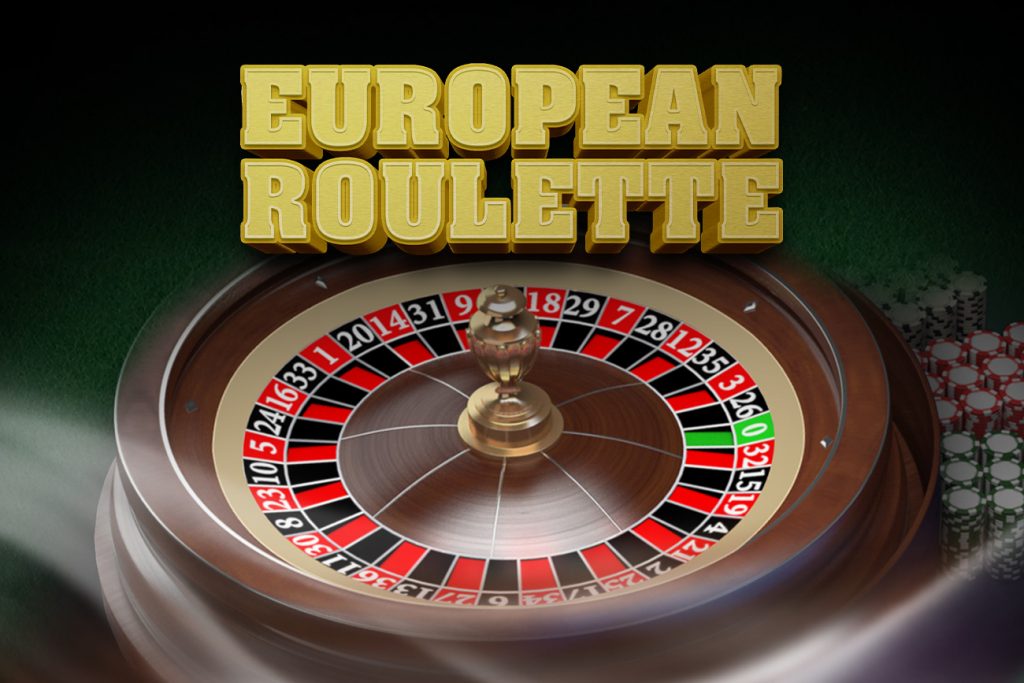
A roulette wheel usually has 37 cells, but there are versions with a different number of pockets too. Although each cell is assigned a number (including the obligatory 0 — zero), the order of numbers is neither ascending nor descending: the numbers are scattered. On the most typical 37-number wheel (European and French roulette) the order is: 0-32-15-19-4-21-2-25-17-34-6-27-13-36-11-30-8-23-10-5-24-16-33-1-20-14-31-9-22-18-29-7-28-12-35-3-26. Low (1-18) and high (19-36) values strictly alternate, except for the 10-5 adjacency. All numbers have colours: zero is green, the rest are red and black in equal measure, and these two colours also strictly alternate. Understanding how the wheel is built lets you use so-called sector bets (Voisins, Tiers, Orphelins), where you bet on a group of numbers seemingly unconnected, although they actually sit next to each other on the wheel.
While the most popular versions of the game have a 37-pocket wheel, American roulette offers bets on 38 numbers — here a second zero (00) was added. The appearance of the “extra” number means each number’s win becomes slightly less likely — 1/38 (2.63%) instead of 1/37 (2.7%). Long-term, the house edge on American roulette is 5.26% versus 2.7% (the European standard). The American wheel also differs in number order.
Roulette bets at an online casino (as at land-based venues) are placed on the betting table, which includes all numbers, now in order. Zero sits apart, while the other numbers are arranged in 12 rows of 3 columns — this lets you bet on a whole column or row. So-called outside bets are also offered — via special sections you can bet on red or black, even or odd numbers, low (1-18) or high (19-36). When you hover the cursor over any part of the table, the numbers your click there would cover are highlighted for you.
The ball determines which bets won: it’s launched onto the spinning wheel, and the number it stops on is the winner; payouts go not only to those who bet on that exact number, but also to those who guessed the colour, even or odd, or got lucky with a bet on a group of numbers (guessed the column, row, dozen, included the number in a split, street, and so on). Mathematically, a wheel that can’t be faulted for symmetry or horizontal positioning guarantees roughly equal win probability for all numbers, with a variance factor. Put simply, if there are 37 numbers, over a long run of thousands of spins any one of them will land roughly once every 37 spins, but that doesn’t mean betting on the same number wins at exactly that frequency: in a short session it may land considerably more or less often. Live-dealer roulette must guarantee a sound wheel, and the automatic OCR system that recognises the result is invariably certified by independent organisations. In virtual RNG versions of the game, it’s the winner-determining algorithm itself that’s certified — representatives of eCOGRA, iTech Labs and other similar bodies run at least 10,000 spins to make sure no patterns can be traced in the results.
For live roulette, which maximally imitates a visit to a land-based venue, a single spin takes roughly 30–90 seconds in total (depending on the table). In RNG roulette the pace depends only on your willingness to play faster or slower. In any case, playing roulette happens in 4 steps.
Real-money roulette assumes that formally you bet not money as such, but chips of a certain denomination; the range of denominations depends on the table, but the specific value, like the number of chips, is chosen by the player. Once you’ve settled on an amount, mentally choose the bet type — outside (a fairly high win chance with a modest payout) or inside (a high risk of loss, but a solid payout on success). Then click on the part of the table that represents your chosen bet, as many times as the number of chips you want to place.
The table below will help you firmly remember which bets are even possible in roulette.
| Bet | Numbers | Payout | Chance (Eur.) | Example |
|---|---|---|---|---|
| Straight Up | 1 | 35:1 | 2.7% | Chip on 14 |
| Split | 2 | 17:1 | 5.4% | Chip on the line 14|15 |
| Street | 3 | 11:1 | 8.1% | Chip on the edge of row 4-5-6 |
| Corner | 4 | 8:1 | 10.8% | Chip on the junction of 4 numbers |
| Six-line | 6 | 5:1 | 16.2% | Chip between two rows |
| Column / Dozen | 12 | 2:1 | 32.4% | Chip on the 1st column field |
| Red / Black | 18 | 1:1 | 48.6% | Chip on the RED field |
| Even / Odd | 18 | 1:1 | 48.6% | Chip on the EVEN field |
| Low / High | 18 | 1:1 | 48.6% | Chip on the LOW field |
In fact this still isn’t the full set of bets, but it’s worth starting with an understanding of these.
Many kinds of roulette also accept so-called announced bets — to place them in one click you need a racetrack, a special table element shaped like the wheel. French roulette offers a racetrack more often, but it occasionally appears in European versions too.
| Bet type | Number coverage | Numbers | Chips | Payout | What it actually is |
|---|---|---|---|---|---|
| Voisins du Zéro | 17 | 22, 18, 29, 7, 28, 12, 35, 3, 26, 0, 32, 15, 19, 4, 21, 2, 25 | 9 | 17:1 (split) 11:1 (trio) 8:1 (corner) | Sector 17 to 25: trio, 5 splits and a corner |
| Tiers du Cylindre | 12 | 5, 8, 10, 11, 13, 16, 23, 24, 27, 30, 33, 36 | 6 | 17:1 (split) | Sector 27 to 33: six splits |
| Orphelins | 8 | 1, 6, 9, 14, 17, 20, 31, 34 | 5 | 35:1 (straight) 17:1 (split) | The rest, except Voisins and Tiers: 4 splits and a straight-up on 17 |
| Jeu Zéro | 7 | 12, 35, 3, 26, 0, 32, 15 | 4 | 35:1 (straight) 17:1 (split) | Sector 12 to 15: 3 splits and a straight-up on 26 |
Experienced players can place announced bets even on roulettes without a racetrack, since they know the actual equivalents of announced bets (for example, how to place Tiers du Cylindre by hand with six splits), but this requires remembering the combinations well and acting very fast.
Limits are stated in the game description and can vary not only from table to table, but even at a single table — depending on which bet is involved. In general, minimums and maximums are lower for riskier inside bets, though each provider and each casino’s management develops its own policy regardless of competitors. A player should choose limits so that you’re comfortable playing without breaching them, including when using progressive bankroll-management strategies, where in a short streak the bet can grow tens or hundreds of times.
In live roulette betting closes on the croupier’s command; in RNG games it’s the moment you place your bet. Then in live roulette there’s a full launch of the physical wheel, and you watch what happens until it stops; in RNG roulette the algorithm selects the winning number instantly and entirely automatically, and the animation of the spinning wheel, if any, serves a purely decorative purpose.
In this article’s section on all bet types, we already laid out the payouts for every roulette bet: for example, if you bet 1 chip on a split and win, you get a 17 to 1 payout, i.e. 17 chips of winnings plus your stake back. If an indivisible bet covers a group of numbers (including split, street, corner and so on), a win counts as the ball landing in any of the cells in that group: so, with a $1 bet on black you win if the ball lands on any black number, collecting $2 — a 1 to 1 payout plus your stake.
Roulette bets can partly overlap each other: for example, the number 14 can be the object of a straight-up, be part of four splits with neighbours, take part in a bet on its row, be in one of four corners or two six-lines, and it also sits in the second column and second dozen, and is simultaneously red, even and “low”. Trying to raise their own win chances, a player can make several separate bets per spin, and the numbers in those bets may overlap twice — say, you bet $10 each on red and on even. This means the bets cover 27 numbers (74.6% of the wheel, the same 74.6% win chance), of which 9 are simultaneously red and even. So there are four possible outcomes (the second point covers two of them):
There are far more double-cover scenarios: we showed it using two bets of the same size and the same 1:1 payout, whereas many players use a tactic of several small straight-up (high-risk!) bets with one large low-risk outside bet for insurance.
In gambling it’s important to stop in time, and the reason to end a session can be either going into profit or serious losses to the bankroll. A small bankroll can be lost entirely, but if the bank is at all sizeable, set a stop-loss: for example, after losing half the amount it’s worth leaving the casino with the remaining money and without a new deposit, continuing some other time. A stop-profit helps you lock in a win: in an infinite session a total loss is inevitable, but by growing the bank by, say, 30% and stopping, you can come out ahead here and now.
Given the specific mechanics, there are very many roulette variants, but exactly three are the main ones a keen player will inevitably encounter one way or another, and all the rest are built on one of them. Simplified, the difference between the main roulette variants is often reduced to the number of zeros on the wheel, but there are other significant differences too.
European roulette is rightly considered the most widespread; its wheel is divided into 37 cells, including 0 and the numbers 1-36. Long-term, the house edge equals 2.7%, which means the RTP is 97.3%, and that holds for all bet types. This version is available everywhere, and it’s highly valued by beginners for the comparative simplicity of its rules; it’s precisely the absence of complex specific conditions that has made European roulette the most common base for various modifications, including Lightning, Immersive and so on.
For some new players it’s a revelation that the numbers on the wheel aren’t in order, but seemingly without any logic at all. In fact there is a certain logic: red and black always strictly alternate, as do (almost always, except for the 10-5 adjacency) low (1-18) numbers with high (19-36), though in both cases the structure is somewhat broken by zero; meanwhile even and odd numbers are placed with no sequence whatsoever. The reason for this order is historical: roulette was invented when wheels were purely mechanical, could be imperfectly balanced horizontally, especially after long use, and placing the numbers as if scattered helped balance the odds, without making the result obvious.
The American wheel differs substantially from the European: here there are already 38 cells, because besides the numbers 1-36 it offers two zeros — 0 and 00. Only at first glance is this a trifle: because of the extra sector the player’s win chances are lower, so the long-term RTP for most bets drops to 94.74%, which is noticeably less favourable. There’s also a special Basket bet: betting on a combination of five numbers (0, 00, 1, 2, 3) and winning, the customer collects a 6:1 payout, but this option has an even lower RTP — just 92.1%. The Surrender rule lets you recover half an even-money bet if zero lands, but this option is offered at far from every table. European roulette is more profitable than American thanks to the higher RTP; you’d only choose the latter for the Las Vegas atmosphere or because of lower limits when you’re being very economical.
Visually the French wheel is no different from the European (37 cells with one zero), but the table is more varied: French roulette usually has a racetrack, which lets you conveniently place announced bets. Also, on 1:1 bets when zero lands, two rules apply: La Partage returns half the bet, while En Prison holds the whole sum until the next spin, returning the money without a win if you manage to win the second time. French roulette’s RTP is often described as 98.65%, but that only applies to 1:1 bets thanks to the rules above; for all other bets French roulette’s RTP is the same 97.3% as European’s.
This is the classic bird in the hand versus bird in the bush: La Partage returns only half the sum, but immediately and guaranteed, while En Prison stretches out the nervy wait but theoretically lets you get all the money back, though it can just as easily be lost. Either way, either of these rules raises French roulette’s RTP, making the game more favourable for the customer.
To consolidate the above, study the table.
| Property | European | American | French |
|---|---|---|---|
| Numbers on the wheel | 37 | 38 | 37 |
| Zeros | 1 (0) | 2 (0, 00) | 1 (0) |
| RTP (standard) | 97.30% | 94.74% | 97.30% |
| RTP (1:1 bets) | 97.30% | 94.74% | 98.65% |
| La Partage | No | No (Surrender as analogue) | Yes |
| En Prison | No | No | Yes |
| Basket bet | No | Yes (extremely low RTP) | No |
| Racetrack | Optional | Usually no | Yes |
Some providers mix the features of several roulettes, creating something in between, or add entirely unique features. As for the three “pure” varieties, for 1:1 bets it’s better to choose French roulette, while in other bet types it’s identical to European in RTP and merely simplifies placing announced bets thanks to the racetrack. American roulette is the least favourable, especially if you bet on Basket.
We’ve already covered these rules broadly, but reinforcement won’t hurt: all three rules trigger only on the condition that the player bet at even money (1:1 — even/odd, red/black, low/high) and zero landed.
This rule means that when 0 or 00 lands, a player who made a 1:1 payout bet hasn’t entirely lost — half the bet is returned to them. The Surrender rule covers both zeros and potentially raises American roulette’s RTP from 94.74% to 97.37%, making it even slightly more favourable than European. This rule is characteristic only of American roulette, but it isn’t mandatory — whether it applies at a particular table should be checked in advance.
This rule is specific to French roulette: if zero lands, effectively meaning a draw, the player is given a second chance. The bet is frozen until the next spin on the same terms, but you can’t collect winnings — if the bet now wins, the money is returned in full, while on a loss the funds are gone. The En Prison rule can’t trigger more than once in a row: if zero lands a second time, that’s a loss.
Another “French” rule, La Partage, when zero lands and you bet at 1:1 odds, simply splits the bet amount in half: for example, with a $50 bet on red and zero landing, $25 is given to the player and the other $25 is lost. This approach steadily and reliably cuts losses from zero exactly in half.
Online roulette, which you may be used to, in most cases copies the rules practised at land-based casinos. However, the difference in formats does provoke some fairly substantial distinctions.
At land-based venues everything is interesting, since you’re in an unusual setting, whereas the online player only has a small screen, and it matters that they don’t simply fall asleep. So at a land-based casino there’s a lot of talking, and the croupier needs time to accept all bets — because of this, literally 20–35 spins “fit” into an hour. Live-dealer roulette, but online, involves automatic bet acceptance and sometimes a less talkative host — here the pace is higher, in places up to one spin a minute. An RNG interface allows autoplay with no pauses between spins at all and instant winner determination, so the pace can rise to as many as 10 spins a minute. The faster the pace, the faster the bank is spent, so beginners are advised to choose slower options like a land-based casino or at least live roulette at online venues.
A land-based casino involves huge costs for premises and service staff, so the entry threshold is always higher here: the cheapest chip can cost $5 or more. Live-dealer roulette at an online casino involves comparatively modest costs for a small studio and a host — here they’ll accept a bet of even $1, occasionally less. RNG roulette involves minimal operating costs, so at some tables you can play for literally a few cents. If your budget is small and you want to stretch it, the online options are unambiguously more relevant.
Roulette free and without registration is available at online casinos only in RNG-based titles: it’s the optimal solution for simply practising or trying a game with specific rules. Live-dealer tables, even at online casinos, never offer a demo mode. Free play is all the more impossible at land-based venues, so playing online with an RNG is ideal for accumulating experience.
Visiting a land-based casino is a full social outing, in some venues even with a mandatory dress code. At the opposite end is RNG roulette, since here the player doesn’t interact with other people at all. Live-dealer play at an online casino is a kind of middle option: you see the dealer and can chat with them if you wish, but they can’t see you. If atmosphere and communication matter to you, a live dealer, even online, is irreplaceable.
A sensible person’s land-based casinos are always strictly licensed venues, checked by regulators; they’re the easiest to complain about to the authorities, and they depend heavily on local public loyalty, so they usually behave impeccably towards players. Online casino games are licensed differently: the RNG is checked by bodies like eCOGRA for patterns in results (there must be no predictable sequences), while in live casinos special attention is paid to the flawlessness of automatic result recognition; the venues themselves may hold a strict but presentable local licence, or an offshore one without scrutiny from the licensor. Overall, with reputable certification the fairness of all roulette formats is the same.
No roulette strategy guarantees a win; on the contrary, in the long run you will inevitably end up in the red. But understanding the maths lets you play longer on a small bank, not to mention stopping in time to lock in a certain profit in short sessions.
Roulette maths is flawless from the casino’s point of view: the venue will earn in any case, and by a percentage known in advance. For European roulette the house edge is 1/37 (since the win pays no more than 35:1 with 37 cells), which is 2.7% — that is, players are paid 97.3% of all the money wagered. It turns out that out of every $1,000, $973 goes to winnings, while $27 the casino keeps for itself. For an individual player, especially in a short session, the maths can look different — you can lose 100% of the bank or come out ahead, but for those planning to play long, the RTP figure is fundamentally important, and different strategies don’t change it at all.
Strictly formally, a player’s chances of coming out ahead depend on chance, not RTP: even if the house edge is greatly inflated, someone could theoretically get lucky and win every spin. But given that you’ll inevitably have both wins and losses, over a long run it’s more profitable to play roulette variants with a higher RTP — you’ll almost certainly notice the bankroll gradually being lost, but at least it’ll happen more slowly.
For clarity, let’s look at typical RTPs for the different roulette variants.
| Variant / bet | House edge | RTP | Note |
|---|---|---|---|
| European (any bet) | 2.70% | 97.30% | Baseline |
| American (most bets) | 5.26% | 94.74% | Double zero |
| American (Basket) | 7.89% | 92.11% | Worst bet in roulette |
| French (1:1 bets) | 1.35% | 98.65% | With La Partage / En Prison |
| French (the rest) | 2.70% | 97.30% | Like European |
A nuance: individual online roulette tables, especially with specific rules, may offer a different, almost always lower RTP. Some casinos may also lower the RTP in an effort to raise their own revenue.
Some roulette players, remembering that each number lands on average once every 37 spins, use a “hot numbers” tactic: they watch 37 spins, then insistently bet on the number that landed more often. There’s also the reverse tactic: betting on a “cold” number because it hasn’t appeared for a long time — supposedly it’s “due”. In reality in roulette it’s impossible to predict the next number from previous results: the probability of a particular number or group of numbers landing is always the same. For the same reason, the statistics of previous spins have no particular value.
There are still no guarantees of winning at roulette, but these recommendations are nonetheless worth heeding.
With no prior experience, a player risks losing all their money very quickly without really figuring out how to manage the game. To avoid this problem, start with European roulette, and better yet launch demo mode (available in RNG games). At this stage your task isn’t to come out ahead, especially as it’s virtual, but simply to understand how to place bets, what they give you, and how quickly you’re ready to place a bet. After spinning 50–100 times and feeling confident, play the same European roulette, but now for small money — preferably a table that accepts bets under $1.
So that gambling doesn’t become a problem, you mustn’t overplay, planning budget rules for the session in advance. Decide in advance the amount you’re mentally ready to lose; once that money is gone, don’t deposit even a minimum more — we’re not chasing losses, the game is over for today. Customers with a fair amount of money in their account, especially with several different games in mind, set a stop-loss: we don’t lose all the funds, we stop the moment we’ve lost, say, 50% of the remaining balance. Although a long-term loss is inevitable in roulette, nothing stops you locking in a short-term profit: set a stop-profit — if you manage to come out ahead by, say, 30%, we don’t tempt fate any further (at least today).
The long-term RTP of all roulette bets is the same, but in a short session it sometimes makes sense to choose a bet depending on budget size. On a small budget, high-volatility, high-risk bets are inappropriate — it’s better to choose 1:1-format bets, to top up the bank frequently with wins, even small ones. On a medium budget you can allow a careful risk in the form of occasional straight-up bets. You can rely exclusively on straight-up bets only on condition that your budget can comfortably withstand a streak of 50–60 losses.
Gambling consists of wins and losses; both must be accepted as they are. Some losses may feel especially galling, but there’s nothing worse than the urge to win it back immediately: if you hadn’t planned to keep playing, under no circumstances continue! Even if you do win it back, it gives an illusion of control, when in fact there’s none (the next round is always unpredictable); and if you lose again, you’ll ruin your mood even more and lose even more money.
A casino’s licence is an important factor in choosing a venue: holders of an MGA or UKGC licence, for example, pay serious money for a prestigious permit to operate, and they’re definitely not interested in getting dragged into scandals and risking their reputation in pursuit of a small momentary gain. A licensed casino always signals that it holds a licence, and if it isn’t mentioned — it means management didn’t bother to obtain one, and won’t bother to follow its own rules either. The RNG roulette at a casino must itself be certified by specialist bodies such as eCOGRA or iTech Labs. It’s also good if the venue offers support in your language, and if withdrawals come with unforeseen delays, it’s better not to delay finding another site.
A loss at roulette is always possible, but it’s within the player’s power to do everything not to hasten the collapse of their own bank.
The odds on each new spin are exactly the same as on any previous one, regardless of how the previous spins ended. If the previous 10 rounds invariably ended with black numbers winning, this promises neither a continuation of the streak in the eleventh round nor that red must now land! The odds of either are 48.6% — as always.
Going all-in at roulette is pointless: any bet option wins with a probability of, at best, 48.6% (less than half). Even complex combined bets leave a 20%-plus chance of loss, and a win with this approach doesn’t multiply the bank so much as cover the losing components of the strategy. Instead of going all-in, sensibly split your bankroll across many bets — this lets you play longer and even leave the game by choice rather than because of a bank collapse.
It’s simple here: in roulette there are categorically no guarantees of winning, and no strategy changes the RTP. Some players rely on Martingale, which promises a huge one-time payout after a losing streak, but it too doesn’t eliminate the house edge: at some point you simply won’t have enough bank to double the bet, and that will be a huge loss that levels out the maths. An even grosser mistake is paying money for access to “secret” strategies.
People play gambling games for the emotions, but emotions mustn’t control the player! Anger at a loss leads to ignoring the stop-loss — that’s how you can lose funds you shouldn’t have, especially if the player made an unplanned deposit to win it back. Euphoria from a win leads to ignoring the stop-profit — instead of locking in your gain, you risk losing the money you won and then the bank itself in attempts to “restore justice”. Feeling your emotions running high, stop playing immediately!
Published Updated