
Roulette.team Gamingencyclopedia

European, American, French — the three roulette variants compared

Three classical variants make up the core of roulette. They share the same betting layout and payout schedule — but the wheel's pocket count, the zero count, and a handful of special rules change the math significantly. This guide shows each variant side by side so you can pick the right wheel for your bankroll, your patience, and your goal.

Variant Hub · 3 classic types3 core variantsRTP from 94.74% to 98.65%Free demos on all

Why a 'variant' matters

Three numbers really separate one variant from another. The pocket count (37 for European, 38 for American) drives the base house edge. The presence of La Partage or En Prison — French roulette's two rescue rules for even-money bets — cuts that edge roughly in half on red/black, odd/even, high/low. And on American specifically, the second zero pocket (00) is what nearly doubles the house edge.

Below we break each variant down individually, then put them side-by-side in a single comparison table. If you only take one rule of thumb away from this page: prefer single-zero wheels (European or French) over American whenever you have the choice. The math is unambiguous.

European Roulette #1 Pick · 2026

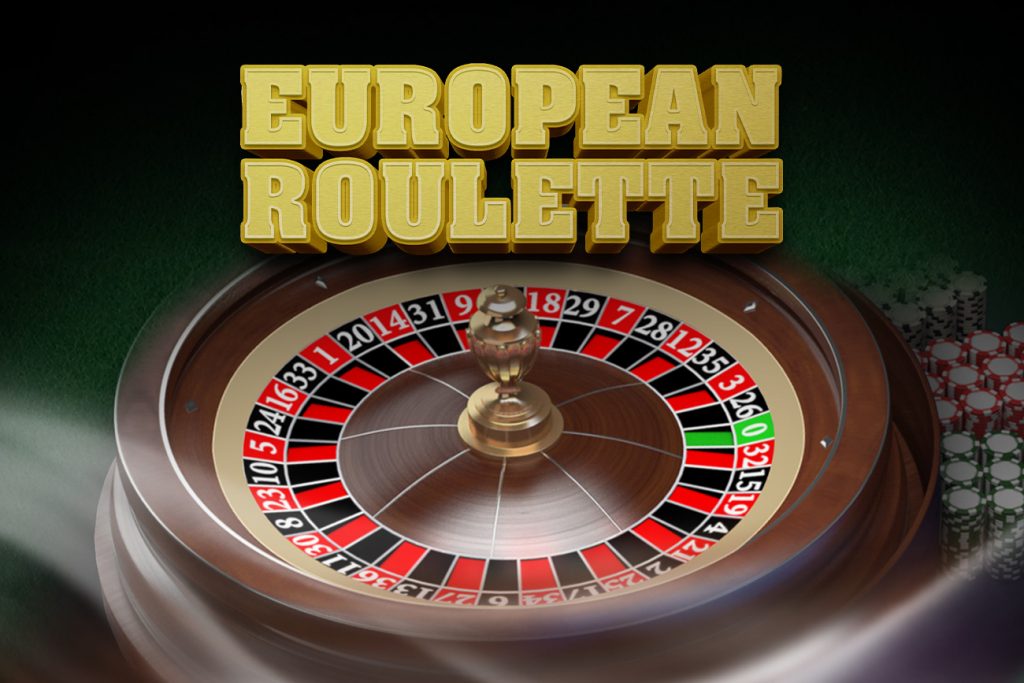
European Roulette

By The global default — start here

37 pockets, single zero, 2.70% house edge. The default starting point for every roulette discussion — still the variant we recommend to beginners and bankroll-conscious players in 2026. Free in-browser demo, no registration.

Quick stats — all three variants

97.30% European RTP
98.65% French RTP (outside)
94.74% American RTP
37 European pockets
37 French pockets
38 American pockets

European vs American vs French — at a glance

The headline maths. Same wheels, same payouts on every winning bet — only the zero count and special rules differ.

Property European American French
RTP 97.30% 94.74% 98.65% (outside)
House edge 2.70% 5.26% 1.35% (outside)
Zero pockets 1 (just 0) 2 (0 and 00) 1 (just 0)
Total pockets 37 38 37
Special rules Surrender (rare) La Partage + En Prison
Unique bet Basket (5-number)
Layout language English English French (Manque, Passe, Impair, Pair…)
Wheel sequence 0, 32, 15, 19, 4, 21, 2, 25 … 0, 28, 9, 26, 30, 11, 7, 20 … Same as European
Best for Default — balanced odds + universal availability American casinos & basket-bet fans Lowest house edge — outside bets only

Interactive wheel — what's inside

1 2 3 4 5 6 7 8 9 10 11 12 13 14

Turret

The decorative dome at the very centre of the wheel head. It holds the spindle in place and is usually machined from polished brass or chromed steel — both for looks and to add a touch of weight at the rotor centre.

Spindle

The vertical axle the wheel head rotates around. Mounted on precision ball bearings so the rotor can spin for 60–90 seconds on a single push from the croupier with almost no friction loss.

Wheel head (rotor)

The free-spinning disc that carries the numbered pockets. Sits on the spindle and is launched in one direction; the croupier sends the ball spinning in the opposite direction along the ball track.

Pocket ring

The annular ring on the wheel head that holds the numbered slots. European wheels carry 37 pockets (0–36); American wheels add a second 00 pocket for a total of 38. The numbering sequence is non-consecutive to spread risk.

Pockets

The individual numbered slots cut into the pocket ring. Each is sized just slightly larger than the ball so it can settle cleanly. Half the non-zero pockets are red, half are black; the zero (and double zero) are green.

Pocket pads

The cushioned bottom inside each pocket. Made of soft synthetic material to absorb the ball's energy and prevent it from bouncing back out once it settles. Casinos replace worn pads regularly to keep landings consistent.

Frets (separators)

The thin metal walls between adjacent pockets. They guide the ball into a pocket once it loses momentum. Modern "low-profile" frets are deliberately shorter than older designs, making the wheel less predictable.

Ball track

The outer wooden ring the ball spins along after the croupier launches it. Polished and slightly sloped inward — gravity does the rest as the ball loses energy and begins drifting toward the centre.

Ball

A small sphere, typically 18–21 mm in diameter, traditionally made from ivory but today from acetal or Teflon. Light enough to bounce dramatically off frets and deflectors before settling.

Deflectors

The eight raised diamond-shaped pegs (sometimes called "canoes") on the inner slope between the ball track and the pocket ring. They scatter the ball's trajectory and add an extra layer of randomness to where it lands.

Apron (inner slope)

The sloped wooden section connecting the ball track to the pocket ring. Once the ball loses enough velocity to fall off the track, it slides down the apron, sometimes ricocheting off a deflector along the way.

Outer bowl

The wooden housing that contains the entire wheel — typically crafted from mahogany, walnut, or rosewood for premium tables. Provides structural rigidity and absorbs vibration during play.

Number track

The painted ring on top of the pocket ring showing the visible numbers. Reading the European sequence clockwise from 0: 32, 15, 19, 4, 21, 2, 25, 17, 34, 6, 27, 13, 36, 11, 30, 8, 23, 10, 5, 24, 16, 33, 1, 20, 14, 31, 9, 22, 18, 29, 7, 28, 12, 35, 3, 26.

Base / plinth

The pedestal the wheel sits on. Heavy and bolted to the table to prevent any vibration during play — even a small tilt would bias the ball over thousands of spins.

European Roulette — verdict

Why pick it

  • Universally available — every online casinos carries multiple European variants
  • Balanced 2.70% house edge — better than American, same as French inside bets
  • Beginner-friendly: simple rules, clean layout, no special exceptions
  • Provider innovation — Lightning, Mega, Quantum all built on European

Compromises

  • No La Partage or En Prison — outside-bet edge stays at 2.70%
  • Still negative-expectation long-term (every roulette variant is)
  • If French is in the same lobby, French is mathematically superior

American Roulette — verdict

Why pick it

  • The basket bet (5-number) is unique — adds a niche bet not available elsewhere
  • Faster spin tempo at most live tables — twice the spins per hour
  • Common in US-licensed casinos when European isn't offered
  • Some operators include Surrender — half stake back on zero/00

Compromises

  • House edge is 5.26% — 1.95× higher than European
  • Basket bet itself has 7.89% edge — worst at the table; never use it
  • Bankroll burns ~2× as fast at equal stake vs European
  • No mathematical scenario where it beats European on expected value

French Roulette — verdict

Why pick it

  • Lowest house edge of any standard variant — 1.35% on outside even-money bets
  • Same European wheel + the La Partage rescue rule
  • Some tables also offer En Prison — historically the classic rule
  • Best variant for low-variance outside-bet sessions (red/black, odd/even, high/low)

Compromises

  • Less widely available than European online — not every operator carries it
  • Layout is in French — minor learning curve for English speakers
  • Inside bets (straight, split, corner) don't benefit from La Partage — 2.70% edge applies
  • Live versions can have higher minimum stakes (5+ USD) than basic European tables

Where to play each variant

These six operators carry the widest variant catalogue in 2026 — at least European + American + Live, several also with French and multiplier titles.

#1 Spinbetter
4.7
Bonus Up to $500
Min $50
Blik Card
#2 Betlabel
4.5
Bonus Up to $400
Min $50
Blik Card Skrill
#3 22Bet
4.4
Bonus Up to 100 free spins
Min $50
Blik Crypto
#4 PlanBet
4.3
Bonus $5 no deposit
Min $20
Blik Skrill
#5 Verde Casino
4.2
Bonus Up to $300
Min $45
Blik Card
#6 Slottica
4.1
Bonus Up to $200
Min $45
Blik Crypto

Picking your variant — five-step decision tree

1

Goal — entertainment or bankroll preservation?

If you're playing primarily for the experience, any variant works. If you're trying to make the bankroll last, lean toward French (lowest edge).

2

Is French in the lobby?

If yes — choose French. Outside-bet RTP at 98.65% is unmatched.

3

If not — European or American?

European, every time. Same payouts, half the long-run drag. Never play American unless it's the only option.

4

Outside or inside bets?

Outside (red/black, odd/even) for low-variance sessions. Inside (straight up, split) for high-variance, big-payout hunts. Match to your bankroll and patience.

5

Stake size & stop rules

Bring an amount you can afford to lose. Set a stop-loss AND a stop-win. Leave when either triggers — discipline beats any 'system'.

Frequently asked questions

Which variant has the highest RTP?
French Roulette tops the chart at 98.65% RTP on even-money bets (thanks to La Partage). Without that rule, single-zero European holds at 97.30%. American sits at 94.74% — the gap shows up clearly once you cross a few hundred spins.
If both European and American are at the same casino, which?
European, every time. Same fun factor, half the long-run drag. The only reason to pick American is if you want the basket bet specifically or have a sentimental attachment to the double-zero feel — both poor reasons financially.
Are the payouts the same across all three variants?
Yes. Every standard bet pays the same multiple across European, American, and French: Straight Up = 35:1, Split = 17:1, etc. The difference is in the win probability — which is what drives the RTP gap.
What's the basket bet and should I use it?
The basket is a 5-number inside bet on American only, covering 0, 00, 1, 2, and 3. It pays 6:1 with a 13.15% probability. Don't use it — the effective house edge is 7.89%, the worst at any roulette table.
Why is the pocket sequence different on American?
American re-orders the pocket layout to accommodate the 00 pocket. The European and French wheels share the same 37-pocket sequence; American is its own design with 38 pockets. The non-consecutive pocket order on all variants is deliberate — it prevents sector-betting exploits.
Are live-dealer variants 'fairer' than RNG ones?
Fairness comes from the certifying lab, not the format. Live and RNG variants from licensed providers both audit out at the published RTP within tight margins. Live just adds the social tempo, dealer chat, and table community.

Deep-dive variant pages

Choose your language