
American Roulette
★ 4.6/5
RTP: 94.74% 
Every strategy on this page was tested in our JavaScript-based RNG simulator with the same 1,000-spin run and $250 bankroll. Charts and conclusions are reproducible — the simulator is linked at the bottom of each strategy page.
Most strategy guides just rewrite each other. We built a 1,000-spin RNG simulator that replicates the roulette wheel's mathematical model exactly, then ran every popular system through it. Below: the honest results, the win curves, and the points where each strategy breaks. No promises — no strategy gives a positive expected value on a fair wheel — but some manage variance much more gracefully than others.
Roughly 10,000 people a month internationally search for roulette strategies on Google. Most of what they find is recycled — site A copies site B, neither has actually tested the system, and the conclusions are usually wrong. Our team approached this differently. We carefully tested the most popular strategies built on mathematical models — using JavaScript for the dynamic ones and a calibrated Google Sheets RNG model for the rest. The result is an objective view with no promises of winnings, because no strategy guarantees consistent long-term profits.
Below you'll find the catalogue, the tests, an outside expert's take, the warnings, and the reading list. Every strategy you can click into has its own page with the simulator embedded — run your own numbers. And if you'd like to play with your results saved and stack them up against other players, open the simulator.
Most strategies fall into one of two buckets: pre-defined bet sequences (Fibonacci, Labouchere, the Four Pillars system) or reactive progressions (Martingale, D'Alembert, Reverse Martingale). For sequence-based systems we run a JavaScript simulator that walks the system spin-by-spin. For pattern-based systems (Andrucci, Final, hot-number tracking) we use a calibrated Google Sheets RNG model that reproduces the roulette wheel's mathematical distribution to four decimal places. After 1,000 spins per scenario we plot the bankroll curve and identify the break points where the system runs out of room or money.
Double after every loss. Recovers everything plus one unit when you win — until the table cap or your bankroll stops the doubling. Tested with 1,000 spins; broke around spin 312 in our run.
Double after every win. Lower bankroll risk than classic Martingale, but you give back your gains on the first loss.
+1 unit after a loss, -1 after a win. The gentlest of the progressive systems. Suitable for long sessions on red/black or odd/even.
1-1-2-3-5-8-13… sequence after losses; step back two after a win. Slower escalation than Martingale; same fundamental break point.
Cross-out sequence. Complex but flexible — you set the target and the system handles the bet sizing. Highest learning curve of the four classics.
Covers 20 of 37 numbers with 1-unit bets on corners + lines + splits. About 54% hit rate per spin; doesn't change house edge but smooths short-session variance.
Three corners + two lines starting at the 14-15-17-18 corner. Covers roughly 65% of outcomes with fixed stake. Built by Ioannis Kavouras.
Track 37 spins, identify the 'hot' number, then bet it. Chaos-theory framing — doesn't beat house edge but adds narrative entertainment.
Progressive system aiming for 7 consecutive wins. Start at base, multiply by 1.5 after each win; reset on any loss.
Three units on red/black + two on a column. Covers a wide chunk of the table, 59-70% hit rate. Good for shorter sessions.
Bet odd numbers; raise after wins, lower after losses. Tight bankroll management for risk-averse players.
Bet numbers ending in the same digit ('finals'). Identify the rare finals over 39 spins, then bet them for the next 9. Niche.
Strategies can give a sense of control, but no system gives you a 100% chance of winning. The house edge wins long-term — it's not opinion, it's arithmetic. That said, statistically you ARE much more likely to win in the short to medium term with a structured approach than without one. The trick is understanding your own goals (entertainment? a small profit? testing variance?), setting a starting bankroll, and choosing the system that fits both.
Most strategies are built around a specific class of bet. If you already know which bet you want to play, start with strategies designed for it.
| Bet type | Probability per spin | Best-fit strategies |
|---|---|---|
| Single number (Straight) | 2.70% | Andrucci method, Finals strategy, Makarov-Biarritz |
| Red / Black, Odd / Even, High / Low | 48.65% | Martingale, D'Alembert, Fibonacci, Reverse Martingale, Labouchere |
| Columns / Dozens | 32.40% | 3/2 strategy, Ascot, Four Pillars (partial) |
| Combination outside bets | varies | Kavouras system, Four Pillars, $1 per Spin |
| Sector bets (Voisins, Tiers, Orphelins) | varies | Voisins du Zero strategy, Tiers du Cylindre strategy |
If you only take three things away from this page:
House edge is built into the game's math. No strategy beats it. The longer you play, the more this asymmetry shows up. To minimise damage, pick the wheel with the lowest edge: French (1.35% on outside bets) > European (2.70%) > American (5.26%). Variant choice matters more than strategy choice.
Anyone selling 'secret formulas' is selling you nothing. Every useful piece of roulette strategy knowledge is freely available — including on this page. If a system worked, the creator wouldn't be selling courses; they'd be at the casino.
Small samples are noisy. Variance over 50 or even 100 spins can make any system look brilliant or catastrophic by chance alone. Run at least 1,000 spins before forming an opinion. Watch table limits and bankroll requirements — progressive systems blow up fast on a long losing streak.
Roulette can be fun and occasionally profitable. If you have $25 to spend on a session, that's plenty — the trick isn't finding a system that always wins (there isn't one), it's finding a system that lets you enjoy the game and walk away when you've hit your target or your stop-loss. No magic, just math and discipline. Roulette reviews and verifies every strategy — but the responsibility for stopping when you should sits with you, not with us.
A consistently working roulette strategy is the request of millions of users who want, if not to come out in the plus, then at least to lose less often. Mentions of effective bankroll-management methods appear in many sources, but almost nowhere are they fully covered specifically in the context of roulette. We offer a detailed breakdown showing the mathematical calculations, verified among others by our specialists. But we’ll be honest: bankroll-management strategies don’t guarantee wins — they merely help you not lose all your money too fast.
For a complete beginner a betting system shouldn’t create the impression of a warm bath: real-money roulette still allows you to lose even the whole bankroll. However, a correctly chosen strategy lets you save the bank: even if a player doesn’t come out in the plus, they’ll at least play for a long time at low cost. At the same time there’s no single best strategy: everything depends on the rules of a specific table, on your bankroll, and on the player’s goal in a particular session.
In recent years progressive strategies such as Martingale, Fibonacci or D’Alembert are considered more popular. They share the principle of adjusting the next bet’s size depending on whether the player won or lost last time, although the math differs. There are also so-called flat strategies: in Masse Égale and the 3/2 System the bet size doesn’t change; they rather suggest what to bet on to claim more tempting wins.
Online roulette has a fairly high RTP (in the French version — up to 98.65%), but you shouldn’t take the return percentage too literally: some players will come out in the plus today, others will lose the whole bankroll. This happens thanks to variance — the spread of results, most of which here and now (without accounting for long-run figures) don’t match the average. Since in roulette the win also depends on the user’s actions, the chosen strategy directly affects variance, but in any case you must calculate the bankroll with a margin to get through a streak of failures and recover. For example, the Martingale potentially returns the player to the game with the very first win, but isn’t designed for prolonged streaks of failures: starting with a $5 bet and losing nine times in a row, you’d have to make the tenth bet a staggering $2,560, otherwise the strategy breaks.
We partly touched on RTP above: the stated percentage shouldn’t be taken literally in the context of a short session, but over the long run the house edge will still be roughly as stated. Say you make 100 bets today and come out in a solid plus, but someone loses, providing the lucky one those wins. Luck can strike tomorrow and the day after, but over a distance of a notional 10,000 bets, luck sooner or later turns to bad luck. Thus, over the long run strategies don’t affect the RTP and don’t guarantee a win, otherwise online casinos simply wouldn’t earn and would be economically unviable.
The main rule of roulette: the result of the next spin never depends on the results of the previous one. Say, after 10 blacks in a row, the chances that red will finally come next don’t rise at all — European roulette assumes this chance is always 48.6% (not 50%, because there’s also zero). An attempt to predict the next result does no harm, since you’re guessing anyway, but looking for patterns in roulette is pointless.
If you’ve decided to test one of the strategies, do it on a sample of at least 1,000 spins. A smaller sample won’t give a clear picture of the strategy, because over a short distance a player can simply get lucky or unlucky, and every serious success or failure will more strongly affect the overall math. When testing a strategy it’s important to keep accurate statistics. Don’t forget to decide in advance what counts as a failure: hitting a specific table’s limits, exceeding your bank’s capacity, or its overly fast (how fast?) loss.
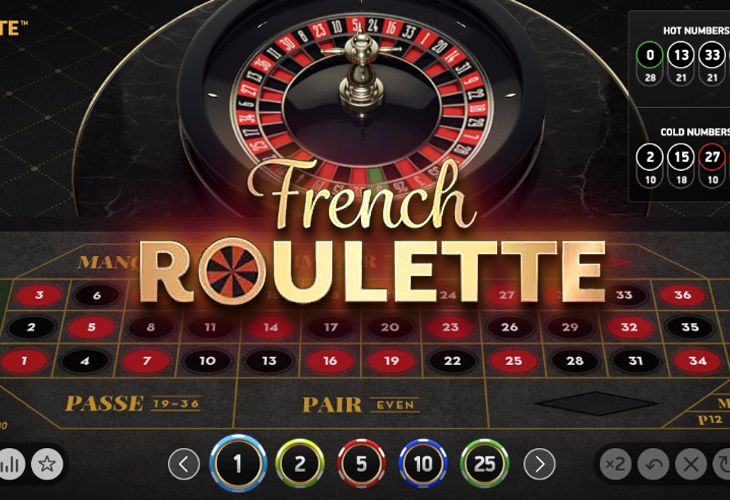

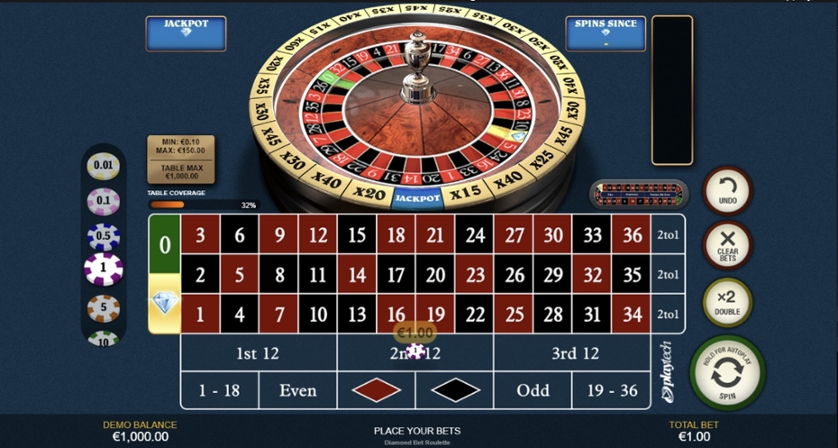
Even if your favourite roulette is available free and without registration, testing every existing strategy yourself is very long, requiring huge patience and attention. We’ve already tested popular strategies for you and calculated everything, and we offer the results of the check as an overview broken down by system type and risk level.
All strategies of this kind are built on raising the bet after a loss, to recover as soon as possible. The risk is obvious: during a prolonged streak of failures you can run into table limits or lose the whole bank fairly fast. However, progressive strategies make sense when the starting bet is very small relative to the bankroll and the session is planned to be short. Strategies of this kind include the Martingale, Grand Martingale, Triple Martingale, Labouchère, the Dutchman’s system, the Cascade and Six-Line Quattro — we’ll briefly cover the most popular, taking 1-to-1 bets as the basis.
The Martingale is a very fast way to recover: having lost, the player doubles the next bet and covers all losses with the very first win. But the strategy has a drawback: if the losing streak drags on, the Martingale breaks on table limits or your bankroll’s constraints.
| Bet (all lost) | Cumulative loss | Consequence |
|---|---|---|
| First — $10 | $10 | Double |
| Second — $20 | $30 | Double |
| Third — $40 | $70 | Double |
| Fourth — $80 | $150 | Double |
| Fifth — $160 | $310 | Double, if your bankroll allows |
| Sixth — $320 | $630 | At many tables there’s nowhere left to double if the limit is $500 |
| Seventh — $640 | $1270 | The vast majority of players aren’t ready to continue |
In essence, the Martingale is only good for short sessions, with fairly high table limits and a very small (relative to the bankroll) starting bet, and during prolonged streaks of failures it’s an almost guaranteed crash.
An even riskier version of the Martingale, but with the prospect of not just recovering but coming out in the plus on the very first win. Besides doubling the bet after a loss, the player adds one more unit:
With the math described, the player lost $50 on the first three bets (1 to 1), but on the fourth the win was $55 — you’re in the plus. A streak of failures with such a rapid rise of bets hits the bankroll even harder, so the bank should be taken with a margin about 30–40% larger than for the regular Martingale.
Labouchère is a cautious strategy with a slower growth of bets. To start we take a target amount, e.g. $15, and split it into sequentially rising numbers: 1-2-3-4-5. The bet is the sum of the outermost numbers: on a win we cross them out, on a loss we append their sum to the end. Here’s how it works on the example of 1-to-1 bets:
The target amount isn’t the whole bankroll: in the example above we see that even the second bet as a loss could have broken the strategy, and by the third we’re in the minus. A feature of Labouchère is that when all the sequence’s numbers are used, the game ends, but during prolonged failure streaks a premature crash is possible.
Positive progression starts not from a desire to recover after a loss, but from the financial ability to raise the bet (and theoretically win even more) after previous wins. For the bankroll these strategies are less dangerous, and among their huge choice (Paroli (Reverse Martingale), 1-3-2-6, Fibonacci (in the “raise after a win” version), the Shawn system, Oscar’s Grind, Lucky Seven) we’ll focus on the best known, taking 1-to-1 bets as the basis.
If the classic Martingale doubles the bet after a loss, the reverse one — after a win. In simple terms, you risk nothing but the amount of the first bet, since the rest is funded by winnings. Paroli is usually used in pursuit of short win streaks: winning three times in a row on 1-to-1 bets puts you in a seven-fold plus; further risk is unjustified, the streak can be started over.
This strategy is considered very unhurried: you don’t chase a huge profit, but you’re unlikely to go into a big minus. We take the initial bet, about 2–5% of the bankroll, as a unit, and keep it the same size after defeats, but increase it by one more unit after a win. The session’s goal is to come out in net profit by one unit, after which everything starts over; thus, if the very first bet wins, you’ve already achieved the goal. With a small unit size the chances of surviving a streak of failures are high, but recovering it and coming out one unit ahead afterwards will be quite hard; rather, this is a strategy for stretching the bankroll over a prolonged session.
Having decided on a unit, make sequential bets of 1, 3, 2 and 6 units, trying to catch a streak of four wins, but after a loss go straight back to the start. A feature of this strategy is minimising possible losses: no more than 2 units of loss per series, and after the first two steps are completed successfully the player is guaranteed to stay with a positive balance. The only serious danger is frequent losses at the first or second stages.
Roulette strategies aren’t necessarily aimed at bankroll management — some of them suggest how to cover the maximum number of numbers with the minimum number of chips. Having handled this task, a casino visitor will win with great regularity and theoretically come out in the plus if they manage to keep their costs to a minimum. This category includes the 666 system, Romanovsky and some others. Remember: large coverage doesn’t guarantee a large profit, and with bad luck you can go into the minus with these strategies too.
Playing by this strategy, the client must be ready to place 66 chips at once:
Coverage is 33 of 37 cells. Given roulette math, we have four scenarios — of which the first three guarantee coming out +6 chips:
All wins are comparatively small against the stake, and one loss has to be covered by 11 lucky bets. The point of the strategy isn’t coming out in the plus, but the maximum session length and the pleasure of regular wins.
This strategy is known in several variants — we’ll look at the more reliable one, where the loss probability is only 13.52%. The bet is 8 chips (or a multiple): 3 each on two of three dozens, and one more each on two corners in the third dozen. Coverage is 32 of 37 numbers, and there are three possible scenarios:
As with the 666 system, frequent wins don’t mean a guaranteed plus, since the loss from a rare defeat is eight times the gain from a lucky outcome.
Flat strategies are those in which the bet size is fixed and doesn’t change, regardless of the results of previous draws. These include, for example, Masse Égale and the 3/2 strategy. For beginners it’s a good solution: you’re unlikely to recover lost funds, but the bank’s spending is predictable.
We put three chips on red and two more on the column with the fewest red numbers. This approach lets you cover 70.27% of all numbers and leaves a chance to win on both bets at once. With five chips placed the results are:
With this strategy an instant crash of the bank is ruled out due to the absence of progression. The strategy is good for its simplicity — it requires no complex learning.
Some roulette strategies are based on the idea that the results of past spins supposedly affect future ones. In fact neither live-dealer roulette nor a certified RNG should allow any patterned sequences, but since the probability of every next result is completely random, you can try these strategies too, without counting on a guarantee of success.
Fans of this method reason like this: there are 37 numbers on the wheel, so if during 37 consecutive spins any number landed two or more times, it’s “hot”, and over the next 37 spins you should bet on it, counting on the trick working again. Unfortunately, such reasoning has nothing to do with the math of randomness: comparatively frequent appearances in the first 37 spins prove nothing, and over the next 37 spins that same number can either land several times again or not hit at all. A nuance: in live roulette a number can land more often due to a wheel defect — if so, this should be used.
Roulette betting strategies should be chosen in connection with what bet type the player plans to use.
Bets of this kind are better suited than others to using strategies — their math is simpler because the win always equals the stake. Most bankroll-management strategies, including Martingale, Paroli, D’Alembert, 1-3-2-6, Oscar’s Grind and Fibonacci, were developed specifically for bets of this kind.
A good option for a slow strategy that lets you seriously stretch even a small bank. We start with a unit, the minimum value for the whole series, and after a loss we increase the bet by one unit, and after a win — decrease it by the same value. In a series of 10 bets such a sequence might look like this: 1-2-3-2-3-4-3-2-1-2.
A dozen and a column each cover 32.4% of the numbers, and with two dozens or two columns you can cover 64.86% of the wheel. For such bets people often use systems aimed at covering the maximum number of numbers with the minimum number of chips — above we already looked at the Romanovsky strategy and the 3/2 system, showing how it works. By the way, Fibonacci performs just as well on such bets as on 1-to-1 bets.
Sector bets are themselves a strategy: they let you cover a significant number of numbers with a comparatively small number of chips. But over the centuries of roulette’s existence players have developed more complex methods based on the Voisins, Tiers, Orphelins sectors — interested users should try at least the Kavouras method and the 7-corner system, though beginners may find them too complex.
A straight-up bet on a number is very risky (a win chance of just 2.7%), but the 35:1 payout covers 35 previous failures. In fact this approach is a pure lottery, so it’s important to manage the bank wisely and make only very small bets so as not to lose everything too fast. Systems of this type include Andrucci, Makarov-Biarritz, the 5-number system and Charlotte.
Although roulette strategies don’t guarantee wins, they help systematise the gameplay. A beginner seeing dozens of betting systems will simply get lost, and the difference between them, though the RTP doesn’t change, does exist: some require a large bank, others are designed for small amounts, there are strategies for different psychological types, and so on. Let’s work out how to choose a strategy.
The global rule: with a small bankroll it’s better not to mess with high-progression strategies, since they can burn through the whole bank fast; your choice is flat (fixed) bets or Paroli with minimal positive progression. Decline the Martingale a priori with a modest bank: after a run of seven failures the eighth bet should be 128 times the first. Let’s look at concrete examples of how the bankroll amount affects your bet choice.
| Bankroll | Recommended strategies | Starting bet | Safe spins |
|---|---|---|---|
| $50–100 | Masse Égale, 3/2, Paroli | $1–2 | 30–50 |
| $100–500 | D’Alembert, 1-3-2-6, Oscar’s Grind | $2–5 | 50–150 |
| $500+ | Martingale, Labouchère, Romanovsky | $5–25 | 100–300 |
You may have a different idea of what bankroll to consider small or large, but the main thing is to keep the stated proportions of bank and starting bet.
If the planned session doesn’t exceed 50 spins, progressive strategies look more justified: over such a short stretch the chance of catching a long losing streak and breaking the system drops. A session of 100 or more spins, on the contrary, raises the chances of a tail of losses, so it’s better to trust flat bets or minimal progression. In a prolonged session the significance of variance decreases: the more spins, the closer you’ll be to the average RTP.
There are two types of players: some are ready for big losing streaks if at the end one win covers all the losses (then the choice is the Martingale or bets on individual numbers); others would rather win a little constantly, even if one failure theoretically covers a batch of wins (for such clients there’s Paroli, Oscar’s Grind, the 666 system). Abandoning a strategy halfway means not revealing its advantages at all; that’s why it’s important to correctly determine your psychological type.
Table limits are a critical constraint for progressive systems: you may have enough money to double the bet by the Martingale’s rules even after the seventh loss in a row, but the limit will break the strategy. Counting on a progressive strategy, choose tables so their limits are no lower than your bankroll, and the system in the context of the available bank should allow you to survive prolonged failures of 8–10 losses in a row. The way to protect against this is to lower the starting bet to the limit, but then it’s important that the table minimum allows it.
We’ve already mentioned: no roulette strategy guarantees wins, and that’s the main thing. A strategy merely systematises your spending, and gambling should never be viewed as a source of income, especially in the long term.
The wins of some players are always paid for by the losses of others, but there’s also a third party — the casino, which takes a small commission for itself. In the case of European roulette the house edge is 2.7% at a 97.3% RTP — this means that on average, after bets of $1,000, you’ll be left with $973, while the venue earns $27. The short-term math will surely be different, but the longer the series, the closer you are to the average, so strategies work only within one session, not over a distance.
Once again: there are no secret strategies, because no strategies guarantee wins or affect the RTP! Only fraudsters can charge you for supposedly proven systems, and if the casino itself sells such strategies, don’t be lazy about complaining to the licensor (UKGC, MGA and so on) — by this you’ll make the world a little more honest.
The internet is a good source of information about everything in the world, but it’s better not to take strategies from the search engine’s first page. The top of the results will always have paid materials whose goal is to interest a potential casino client; the reader is told about a system’s advantages, “forgetting” to mention its drawbacks, and is also gently nudged toward the idea that a specific venue is better than competitors, which isn’t always true. When choosing a strategy, look for deep materials with a full explanation of the math, tables and clear charts.
Over a short distance the role of variance rises substantially: someone will get very lucky, and someone, on the contrary, will lose the whole bankroll, but both results actually don’t characterise the system — they’re random. When the roulette is run not 100 but 1,000 or more times to test a strategy, the chance factor is minimised, and you can objectively assess the system’s usefulness and a specific roulette’s favourability. You can run any of the described systems over 1,000 spins in our strategy tester — it does all the calculations for you.
Even if you don’t know the principles of choosing a system, it’s all much simpler than it seems!
Demo mode lets you try a system without risking your money: if you don’t like it, you’ll only lose time. It’s better to start with flat-bet strategies (mathematically simpler) or minimal progression: for example, spin 50 times with Masse Égale, then the same number with Paroli, and compare the results.
With experience, you can compare fundamentally different strategies, e.g. a progressive system against a flat one, but to protect against the factor of pinpoint luck or bad luck the sessions need to be stretched to 1,000 spins and more, and to speed up the process you can use a simulator. The comparison result can no longer be based on impressions alone: record how significant the chance factor was, how strong the bank’s drawdown was during losing streaks, and what the outcome was for the bankroll.
Published Updated
Run any system against 1,000 spins of European wheel — see your bankroll curve in real time.
The lowest house edge among the classic wheels — the natural baseline for testing systems.
Every wager catalogued with its true probability and effective house edge.
The eight-step methodology we use to audit every strategy review on this site.